Introduction
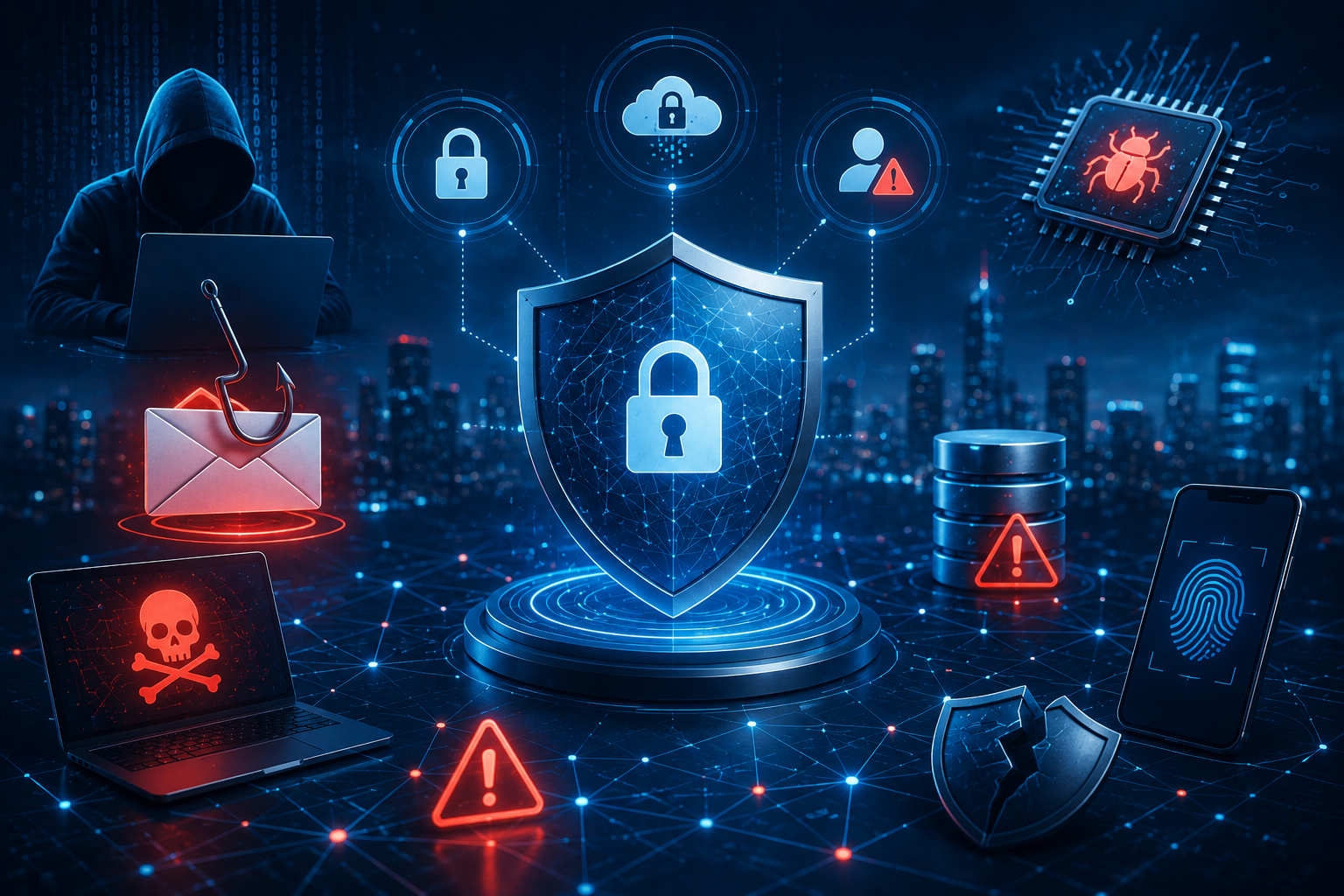
As businesses continue to embrace digital transformation, cloud computing, artificial intelligence (AI), and remote work, cybersecurity has become more critical than ever. In 2026, cybercriminals are leveraging advanced technologies, including AI-powered attack tools, automated malware, and sophisticated social engineering techniques, to target organizations of every size.
Cyberattacks no longer affect only large enterprises. Small and medium-sized businesses (SMBs), startups, educational institutions, healthcare organizations, financial services, and government agencies are increasingly becoming attractive targets due to limited security resources and valuable digital assets.
Understanding today's cybersecurity landscape is the first step toward protecting your organization. This article explores the top cybersecurity threats businesses face in 2026, their potential impact, and practical strategies to strengthen your organization's security posture.
Why Cybersecurity Matters in 2026
Modern businesses rely heavily on digital infrastructure, cloud platforms, connected devices, and online services. While these technologies improve efficiency and innovation, they also increase the attack surface for cybercriminals.
A successful cyberattack can lead to:
- Financial losses
- Operational downtime
- Data breaches
- Regulatory penalties
- Reputation damage
- Loss of customer trust
- Intellectual property theft
- Business disruption
Investing in cybersecurity is no longer optional—it is a business necessity.
Top Cybersecurity Threats in 2026
1. AI-Powered Cyberattacks
Artificial Intelligence is transforming both cybersecurity defenses and cyberattacks. Attackers are using AI to automate phishing campaigns, identify system vulnerabilities, bypass traditional security tools, and create highly convincing social engineering attacks.
Common AI-driven attacks include:
- Automated phishing emails
- AI-generated malware
- Password guessing
- Intelligent vulnerability scanning
- Deepfake voice and video attacks
Businesses must adopt AI-powered security solutions capable of detecting evolving threats in real time.
2. Ransomware Attacks
Ransomware remains one of the most damaging cybersecurity threats. Attackers encrypt business data and demand payment in exchange for restoring access.
Modern ransomware groups often:
- Steal sensitive data before encryption
- Threaten public data leaks
- Target cloud backups
- Attack supply chains
- Disrupt critical business operations
Prevention Tips
- Maintain offline backups
- Keep systems updated
- Use endpoint protection
- Train employees
- Implement Zero Trust security
3. Phishing and Social Engineering
Cybercriminals continue to exploit human error through deceptive emails, text messages, fake websites, and phone calls.
Common phishing techniques include:
- Business Email Compromise (BEC)
- Fake invoice scams
- Credential harvesting
- QR code phishing (Quishing)
- Spear phishing
- CEO fraud
Regular cybersecurity awareness training significantly reduces phishing risks.
4. Cloud Security Misconfigurations
As organizations migrate workloads to the cloud, improperly configured cloud environments have become a leading cause of data breaches.
Common issues include:
- Publicly exposed storage buckets
- Weak access controls
- Misconfigured firewalls
- Insecure APIs
- Excessive user permissions
Regular cloud security audits help identify and correct these vulnerabilities.
5. Insider Threats
Not every cyber threat comes from outside the organization. Employees, contractors, and business partners may unintentionally or intentionally compromise sensitive information.
Examples include:
- Accidental data leaks
- Unauthorized file sharing
- Privilege misuse
- Stolen credentials
- Malicious insiders
Role-based access controls and continuous monitoring reduce insider risks.
6. Supply Chain Attacks
Organizations increasingly depend on third-party vendors, software providers, and cloud services. Attackers exploit vulnerabilities within trusted suppliers to gain access to larger targets.
Examples include:
- Compromised software updates
- Third-party application vulnerabilities
- Vendor credential theft
- Open-source dependency attacks
Businesses should regularly assess the cybersecurity posture of their vendors and partners.
7. Internet of Things (IoT) Vulnerabilities
Connected devices such as smart cameras, industrial sensors, healthcare equipment, and manufacturing systems often have limited built-in security.
Common IoT risks include:
- Default passwords
- Outdated firmware
- Weak encryption
- Device hijacking
- Botnet attacks
Organizations should secure IoT devices through network segmentation, firmware updates, and strong authentication.
8. Deepfake and Identity Fraud
Advancements in generative AI have made deepfake audio and video increasingly convincing. Attackers can impersonate executives, employees, or trusted partners to manipulate financial transactions or access sensitive systems.
Businesses should verify unusual requests using multiple communication channels and strengthen identity verification processes.
9. API Security Threats
Modern applications rely heavily on APIs to exchange information. Poorly secured APIs can expose sensitive data or allow unauthorized access.
Common API risks include:
- Broken authentication
- Excessive data exposure
- Injection attacks
- Rate-limit bypass
- Insecure endpoints
Regular API testing and authentication controls help mitigate these risks.
10. Credential Theft and Password Attacks
Weak or reused passwords remain one of the easiest ways for attackers to gain unauthorized access.
Common techniques include:
- Credential stuffing
- Password spraying
- Brute-force attacks
- Keylogging
- Session hijacking
Businesses should enforce:
- Strong password policies
- Password managers
- Multi-Factor Authentication (MFA)
- Identity monitoring
Emerging Cybersecurity Trends
Several trends are reshaping cybersecurity in 2026:
Zero Trust Architecture
Organizations increasingly verify every user, device, and application before granting access, regardless of location.
AI-Powered Threat Detection
Machine learning enables faster detection of unusual behavior and suspicious activities across networks.
Extended Detection and Response (XDR)
XDR platforms combine endpoint, network, cloud, and identity monitoring into a unified security solution.
Security Automation
Automated incident response reduces reaction time and minimizes damage during cyber incidents.
Privacy-First Security
Businesses are strengthening data governance to comply with evolving privacy regulations and customer expectations.
Industries Most at Risk
While every organization faces cybersecurity risks, some sectors are particularly attractive targets.
Healthcare
- Patient records
- Medical devices
- Hospital networks
Financial Services
- Banking systems
- Payment platforms
- Customer financial data
Manufacturing
- Industrial control systems
- Smart factories
- Supply chain operations
Retail and E-Commerce
- Customer payment information
- Online transactions
- Loyalty programs
Education
- Student records
- Research data
- Learning platforms
Best Practices to Protect Your Business
Businesses can significantly reduce cybersecurity risks by implementing the following measures:
- Conduct regular cybersecurity risk assessments.
- Enable Multi-Factor Authentication (MFA) across all systems.
- Keep operating systems and applications updated.
- Encrypt sensitive business data.
- Train employees on cybersecurity awareness.
- Maintain secure offline backups.
- Monitor networks continuously using Security Information and Event Management (SIEM) tools.
- Adopt a Zero Trust security model.
- Secure cloud environments with proper configuration management.
- Develop and regularly test an incident response and disaster recovery plan.
How TEQZen Helps Secure Businesses
At TEQZen, we provide comprehensive cybersecurity solutions designed to protect organizations from evolving digital threats. Our services include:
- Cybersecurity Consulting
- Network Security Solutions
- Web and Application Security
- Cloud Security Assessment
- Vulnerability Assessment and Penetration Testing (VAPT)
- Endpoint Security
- Identity and Access Management (IAM)
- Security Awareness Training
- Incident Response Planning
- Security Monitoring and Compliance Support
Our proactive approach helps businesses strengthen resilience, reduce risk, and safeguard critical digital assets.
Conclusion
Cybersecurity in 2026 extends far beyond traditional antivirus software and firewalls. Businesses must prepare for AI-powered attacks, ransomware, cloud vulnerabilities, phishing campaigns, insider threats, and increasingly sophisticated identity fraud. As digital transformation accelerates, proactive security strategies become essential for protecting data, maintaining customer trust, and ensuring business continuity.
By combining modern security technologies with employee awareness, strong governance, and continuous monitoring, organizations can significantly reduce cyber risks and remain resilient in an ever-changing threat landscape. Investing in cybersecurity today is an investment in your organization's future success.